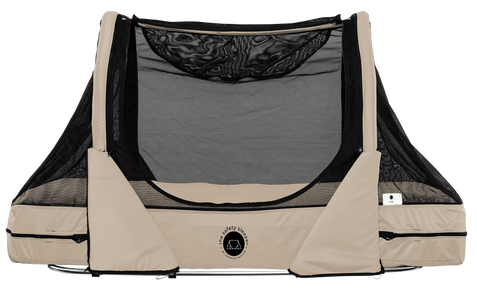
Choosing a Safety Bed for Autism: What Parents Need to Know
Choosing a Safety Bed for Autism: What Parents Need to Know
For parents of children on the autism spectrum, bedtime often feels less like a peaceful routine and more like a high-stakes safety challenge. Research shows that up to 80% of children with autism spectrum disorder (ASD) experience significant sleep disturbances, including difficulty falling asleep, frequent night waking, and nighttime wandering (elopement).
When an autistic child wakes up in the middle of the night, a standard bed offers no physical boundaries to keep them safe. Unsupervised wandering inside the home can quickly lead to dangerous situations, such as accessing kitchens, stairwells, or even leaving the house entirely.
A safety bed for autism provides a secure, sensory-friendly environment designed to prevent elopement, reduce anxiety, and help your child, and your entire family, get the restorative sleep you need.
This guide breaks down what parents need to know when choosing an autism safety bed, from key features to look for to navigating insurance coverage.
Why Standard Beds Fail Autistic Children
Traditional toddler beds, twin mattresses, or standard bed rails are rarely designed to withstand the unique safety and behavioral challenges associated with autism.
1. Elopement and Safety Hazards
Children with autism often lack traditional safety awareness. Waking up confused or seeking sensory input in the dark can lead to wandering. Standard bed rails leave massive gaps that pose entrapment risks, while low toddler beds allow children to get out freely whenever they choose.
2. Sensory Overload in Open Bedrooms
A standard bedroom is full of visual and auditory stimuli, shadows, drafts, flickering electronics, or toys across the room. For a child with sensory processing differences, an open sleeping space can prevent the nervous system from winding down into deep sleep.
3. Involuntary or Strenuous Movement
Many children on the spectrum engage in repetitive self-soothing behaviors, such as head-banging, body-rocking, or thrashing before falling asleep. Hard wooden or metal bed frames present immediate injury risks during these movements.
Key Benefits of a Dedicated Autism Safety Bed
Investing in a specialized autism bed goes far beyond replacing furniture; it creates a therapeutic sleep environment.
| HOW AN AUTISM SAFETY BED HELPS | |
|---|---|
| Prevents Wandering | Lockable, enclosed perimeter |
| Soothes Sensory System | Cocoon-like, distraction-free space |
| Eliminates Injury | Padded, gap-free interior |
| Restores Family Sleep | Caregivers sleep with peace of mind |
- Physical Containment Without Institutional Restraints: Modern enclosed beds use soft, high-tensile mesh and external locking zippers to keep children safely inside without feeling clinical or punitive.
- Sensory Regulation: The enclosed structure acts as a "sensory pod," dampening outside visual distractions and drafts. This predictable, cozy space helps trigger the body's natural sleep response.
- Zero Entrapment Zones: Specialized safety beds zip the mattress directly into the enclosure fabric, ensuring no gaps where arms, legs, or head can get stuck.
- Caregiver Peace of Mind: Knowing your child cannot wander unsupervised at night lets parents fall into deep, uninterrupted sleep.
Essential Features to Look for in an Autism Safety Bed
Not all adaptive beds are created equal. When evaluating options for a child with autism, ensure the bed includes these essential features:
1. External Locking Enclosures
Children on the spectrum are often highly creative problem-solvers. Look for heavy-duty, medical-grade zipper systems on the outside of the enclosure, with secondary locking mechanisms or safety clips your child cannot unfasten from the inside.
2. 360-Degree Breathable Mesh
Airflow and visibility are paramount. Choose a bed constructed with durable, flame-retardant mesh that allows continuous air circulation and gives you an unobstructed view of your child from anywhere in the room.
3. Fully Padded Internal Structure
If your child engages in head-banging or rocking, every internal frame component must be covered with thick, medical-grade padding to absorb impact and prevent bruising or injury.
4. Washable, Hygienic Materials
Bedwetting, sensory seeking with liquids, or routine spills require quick cleanup. Ensure the enclosure covers are fully removable and machine-washable, and that the mattress cover is 100% waterproof.
5. Portability for Routine Consistency
Children with autism thrive on routine. Traveling to a hotel, staying at a relative's house, or spending time in a hospital can trigger severe anxiety if their sleeping setup changes. A lightweight, portable safety bed that packs down into travel bags ensures your child keeps their safe sleep space wherever they go.
Comparing Your Options: Soft Enclosures vs. Hard Wooden Beds
When researching beds for a child with autism, you will generally encounter two main styles:
| Feature | Soft-Sided Mesh Enclosures (e.g., The Safety Sleeper®) | High-Sided Wooden/Hard Beds |
|---|---|---|
| Primary Focus | Elopement prevention, sensory soothing, impact safety | Long-term stationary medical/lift support |
| Impact Safety | Flexible mesh & padded poles absorb movement | Hard surfaces require heavy add-on padding |
| Portability | Highly portable; packs into travel suitcases | Permanent room fixture; non-portable |
| Sensory Feel | Cozy, tent-like enclosure that reduces anxiety | Furniture-style enclosure; can feel open above |
| Cleaning | Machine-washable fabrics | Wipe-down surfaces |
How to Get an Autism Safety Bed Covered by Insurance
Specialized safety beds are classified as Durable Medical Equipment (DME), meaning they are frequently eligible for coverage through private health insurance, Medicaid, or state autism waivers.
- Document Sleep Issues: Keep a 2-week sleep diary detailing night waking, wandering attempts, self-injury risks, or near-miss accidents.
- Obtain a Diagnosis & Rx: Your child's pediatrician, neurologist, or developmental specialist must provide an official ASD diagnosis and a prescription for a safety bed.
- Get a Letter of Medical Necessity (LMN): Work with an Occupational Therapist (OT) or Physical Therapist (PT) to draft an LMN that specifically explains why standard beds and bed rails are unsafe for your child.
- Partner with the Manufacturer: Select a company experienced in navigating insurance workflows.
Read More: For step-by-step guidance and downloadable templates, check out our full guide on Letters of Medical Necessity for Safety Beds.
Transform Bedtime into a Safe, Calm Routine
Choosing the right safety bed for autism is an investment in your child's physical safety, emotional well-being, and overall development. By providing a secure, sensory-friendly sanctuary, you give your child the foundation for better nights and brighter days.
Discover how The Safety Sleeper from Abrams Nation delivers medical-grade security, sensory comfort, and portable convenience designed specifically for families navigating autism.