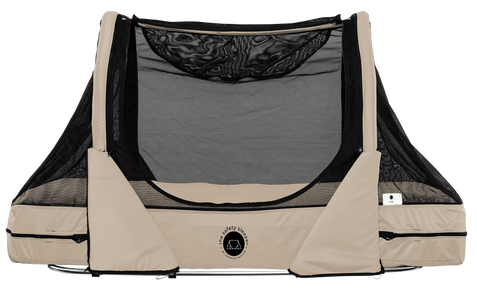
How to Choose the Right Special Needs Safety Bed for Your Child: A Complete Buyer’s Guide
Finding the right bed for a child with complex physical, developmental, or sensory needs is one of the most critical decisions a parent or caregiver can make. A standard twin bed or toddler crib often fails to provide the necessary boundaries, impact protection, or structural integrity required to keep a child safe through the night.
When searching for a bed for a special needs child, the market can feel overwhelming. With various designs, ranging from wooden high-sided beds to portable mesh enclosures, understanding which features align with your child's specific diagnosis and behaviors is essential.
This comprehensive buyer’s guide breaks down the essential features to evaluate, key safety standards to check, and practical tips for choosing the right special needs safety bed for your home.
Step 1: Assess Your Child’s Specific Needs and Nighttime Behaviors
Before looking at specific models or features, evaluate your child’s nighttime routine, physical mobility, and behavioral patterns. Different medical conditions require vastly different safety considerations.
1. Nighttime Wandering and Elopement Risk
If your child is on the autism spectrum or experiences cognitive delays that impact safety awareness, unattended nighttime wandering (elopement) poses severe risks.
- What you need: A fully enclosed bed featuring lockable external enclosures that prevent independent exits while maintaining visibility and airflow.
2. Involuntary Movements and Seizures
Children with epilepsy, cerebral palsy, or severe spasms need protection from hard bed frames and impact-related injuries during nighttime episodes.
- What you need: Generous internal padding, soft-sided walls, and a completely gap-free mattress perimeter to eliminate entrapment zones.
3. Sensory Overload and Anxiety
Sensory processing differences can make wide-open rooms or unpredictable shadows overwhelming, delaying sleep onset.
- What you need: A cozy, enclosed sensory environment that dampens outside light and visual distractions, creating a calm, predictable sanctuary.
4. Medical Equipment Access
For children utilizing feeding tubes, pulse oximeters, oxygen lines, or IV lines during sleep, the bed must accommodate tubing safely without pinching or tangling.
- What you need: Built-in medical access ports that let tubing pass securely into the sleep enclosure.
Step 2: Essential Features to Look for in a Special Needs Safety Bed
When comparing safety beds, look closely at construction details, material safety certifications, and usability.
| MUST-HAVE SAFETY BED FEATURES | |
|---|---|
| Enclosure Security | External Zippers & Gap-Free |
| Impact Protection | Medical-Grade Padding |
| Fabric Quality | Flame-Retardant & Washable |
| Health & Hygiene | Easy Cleaning & Liquid Proof |
| Portability & Assembly | Lightweight for Travel |
1. Medical-Grade Zip Enclosures and Gap-Free Design
One of the most dangerous hazards of improvised beds or side rails is body entrapment between the mattress and frame. A high-quality special needs safety bed uses an integrated enclosure system.
- Look for: Heavy-duty, medical-grade zipper mechanisms that zip the mattress directly to the enclosure walls. Ensure zippers feature external securing systems or clips that children cannot undo from the inside.
2. High-Impact Frame Padding
Hard edges present injury hazards during tantrums, thrashing, or nocturnal seizures.
- Look for: Fully padded structural poles or soft-sided fabric frames. High-density, medical-grade foam padding should cushion every hard internal component.
3. Breathable, Flame-Retardant, and Non-Toxic Fabric
Airflow and material safety are non-negotiable.
- Look for: High-tensile, flame-retardant mesh that exceeds safety regulations while providing 360-degree breathability. The fabric should allow caregivers to clearly monitor the child from anywhere in the room.
4. Machine-Washable and Hygienic Materials
Bedwetting, spilled fluids, and routine messes happen. Cleaning a complex medical bed should not require hours of teardown.
- Look for: Removable, machine-washable enclosure covers and waterproof, wipeable mattress covers to maintain a clean sleeping environment.
5. Portability and Ease of Travel
Sleep routines are vital for children with special needs. A bed that stays anchored in one room makes family vacations, medical stays, or sleepovers at grandparents' homes difficult.
- Look for: A lightweight, portable safety bed that breaks down easily into compact travel bags without requiring specialized tools.
Step 3: Comparing Main Types of Special Needs Beds
Understanding the differences between bed categories will help narrow down the best fit for your home setup:
| Bed Type | Primary Use Case | Key Advantages | Considerations |
|---|---|---|---|
| Fully Enclosed Mesh Beds (e.g., The Safety Sleeper®) | Autism, Seizures, Wandering, Sensory Needs | Highly portable, gap-free, soft impact protection, lightweight | Requires floor space or traditional bedframe. |
| High-Sided Wooden Safety Beds | Severe Physical Mobility Issues, Lift Needs | Sturdy, furniture-style look, compatible with patient lifts | Permanent fixture, heavy, non-portable, higher cost |
| Smart Tech Safety Enclosures | Sensory Regulation, Continuous Monitoring | Built-in cameras, lights, and environmental controls | High cost, complex electrical components, non-portable |
Step 4: How to Secure Funding and Insurance Coverage
A quality safety bed is classified as Durable Medical Equipment (DME), which means it may be covered by private health insurance, Medicaid, or state waiver programs.
- Consult Your Care Team: Work closely with your child’s pediatrician, physical therapist (PT), or occupational therapist (OT) to document your child's specific safety risks during sleep.
- Obtain a Letter of Medical Necessity (LMN): Your therapist or physician must write a detailed LMN explaining why a standard bed is medically unsafe and how a specific safety bed prevents injury.
- Work with the Manufacturer: Choose a company with dedicated customer support to assist with insurance codes, billing documentation, and claim submissions.
Give Your Child the Gift of Safe, Restful Sleep
Choosing a special needs safety bed is an investment in your child’s physical protection and your family's peace of mind. By prioritizing gap-free enclosures, impact padding, medical-grade materials, and portability, you can select a bed that provides a safe sanctuary for years to come.
Ready to explore options tailored to your child’s needs? Learn more about custom sizing, safety testing, and travel capabilities with The Safety Sleeper from Abrams Nation.