TRAVELING WITH A SPECIAL NEEDS CHILD: PORTABLE SLEEP SOLUTIONS FOR STRESS-FREE TRIPS
Family vacations and holiday visits with relatives are meant to create cherished memories. However, for parents traveling with a special needs child, the thought of sleeping away from home can trigger immense anxiety.
When your child relies on a structured environment, sensory routine, or specialized safety equipment to sleep securely at night, standard hotel rooms and guest bedrooms can pose major challenges. Unfamiliar layouts, unpadded bed frames, low mattresses, and unsecured doors increase the risk of nighttime wandering, falls, or sensory meltdowns.
Fortunately, you don't have to choose between staying home and risking your child's safety. A dedicated portable special needs bed allows you to bring a familiar, medical-grade sleep sanctuary wherever your family travels.
This guide outlines the unique sleep challenges of traveling with a special needs child, what features to look for in a travel safety bed, and practical tips for stress-free nights on the road.
Why Standard Travel Sleep Arrangements Fail Special Needs Children
When staying at a hotel, vacation rental, or relative's home, they rarely meet the child’s complex physical, developmental, or sensory requirements:
1. Unsecured Rooms and Elopement Risks
Hotel doors, sliding balcony gates, and unfamiliar house layouts pose severe dangers for children with autism or cognitive impairments who tend to wander at night. Hotel door locks are often accessible to curious hands, and an unfamiliar environment can increase confusion upon waking.
2. Unsafe Bed Heights and Hard Furniture
Standard hotel beds are often elevated, posing a fall risk for children with epilepsy, low muscle tone, or involuntary movements. Nightstands with sharp corners and unpadded headboards increase the risk of injury during nighttime seizures or thrashing.
3. Hotel Cribs and Air Mattresses are Inadequate
Hotel-provided pack-and-plays or cribs have strict weight limits, are easily tipped over by older children, and present entrapment gaps. Inflatable air mattresses can pop, lack supportive side boundaries, and offer no enclosure protection against wandering.
What to Look for in a Portable Special Needs Sleep Solution
A true travel safety bed should combine the rigorous security of a stationary medical bed with the convenience of lightweight, travel-friendly engineering.
| PORTABLE SAFETY BED CHECKLIST FOR TRAVEL | |
|---|---|
| Portability & Weight | Packs down into compact suitcases |
| Airline & TSA Ready | Qualifies as free medical baggage |
| Tool-Free Assembly | Sets up quickly in under 15 minutes |
| Total Security | Enclosed, gap-free, external zipping |
When evaluating portable sleep options, look for these essential travel features:
1. Compact, Suitcase-Friendly Portability
A travel sleep solution shouldn't require hiring a freight carrier. Look for a portable bed frame and enclosure that break down compactly into standard rolling duffel bags or suitcases that fit easily into a car trunk or airplane overhead bin.
2. TSA & Airline Compliance (Medical Baggage)
When flying, durable medical equipment (DME) is protected under airline regulations. High-quality portable safety beds qualify as medically necessary equipment, so airlines generally let you check them for free without counting them toward your standard baggage allowance.
3. Fast, Tool-Free Assembly
After a long day of driving or flying, the last thing parents need is a complicated 2-hour assembly process using specialized tools. Choose a portable bed designed with color-coded, snap-together frame components that can be fully assembled in 10 to 15 minutes.
4. Enclosed, Gap-Free Safety and Sensory Comfort
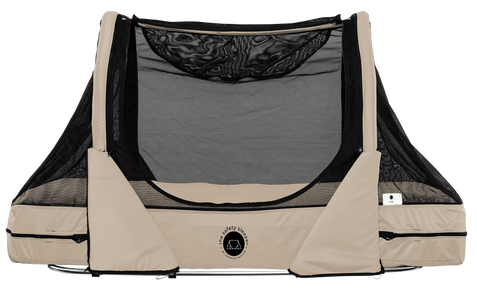
Portability should never compromise protection. Make sure the portable bed has a fully enclosed, flame-retardant mesh enclosure with medical-grade, external-locking zippers and a zip-in mattress compartment to eliminate entrapment gaps and prevent night wandering.
4 Tips for Maintaining Safe Sleep Routines on the Road
Combining a portable safety bed with proactive travel strategies ensures a smooth transition for your child:
1. Practice at Home Before You Leave
Introduce the portable bed in your child's home bedroom a week or two before your trip. Allow them to nap or sleep overnight in the travel setup so the environment feels familiar and safe before you arrive at your destination.
2. Pack Familiar Sensory Anchors
Recreate the sensory cues of home inside the travel bed. Pack your child's usual fitted sheet, favorite blanket, sound machine, or sensory plush toy. Familiar scents and textures signal to your child's nervous system that it is time to sleep, even in a strange room.
3. Set Up a Low-Stimulus Sleep Corner
When you arrive at your hotel or accommodation, set up the portable safety bed in the quietest, lowest-traffic corner of the room – away from main entryways, drafty vents, or direct window glare.
4. Stick to Your Regular Bedtime Timeline
While travel schedules can be unpredictable, try to maintain your child's usual bedtime routine (e.g., bath, story, sensory brushing, bed) at the same local time as at home to prevent circadian disruption.
Sleep Safely Anywhere with The Safety Sleeper®
Traveling with a special needs child doesn't have to mean sleepless nights or constant worry. With the right portable sleep solution, your family can explore new places while ensuring your child stays safe, secure, and well-rested.
Designed specifically for travel and home use, The Safety Sleeper® from Abrams Nation is a medical-grade, fully enclosed portable bed that packs into convenient rolling suitcases. It offers tool-free assembly, flame-retardant enclosed mesh, and lightweight durability trusted by families worldwide.
Ready to plan your next stress-free trip? Explore options, dimensions, and custom accessories for The Safety Sleeper® today.