Self-Injurious Behavior and Safe Sleep | Abram's Nation
Managing self-injurious behavior (SIB) is one of the most physically and emotionally exhausting challenges for caregivers of children with special needs, and the stakes are significantly higher when these behaviors occur at night.
When a child engages in head banging, severe scratching, or violent thrashing while semi-conscious or during nighttime awakenings, it turns the bedroom from a place of rest into a high-risk environment. For parents, this usually means sleeping with one eye open or sleeping on the floor next to the child, resulting in chronic sleep deprivation for the entire family.
Understanding the root triggers of nighttime SIB and modifying the physical sleep environment are the two most effective steps in protecting a child who cannot safely regulate their movements in the dark.
Table of Contents
Recognizing Nighttime Triggers
Children diagnosed with Autism Spectrum Disorder (ASD), Smith-Magenis Syndrome, Angelman Syndrome, and other neurodevelopmental conditions often exhibit SIB as a form of communication or sensory regulation. When these behaviors occur at night, they are typically driven by a few specific triggers:
- Sensory Dysregulation: Waking up in a dark, quiet room can cause extreme sensory under-stimulation. Behaviors like head banging or rhythmic rocking provide intense proprioceptive feedback that helps the child self-soothe.
- Undiagnosed Physical Pain: Because many children who exhibit SIB are non-verbal or have limited communication skills, they cannot tell you if they are experiencing acid reflux, dental pain, ear infections, or seizure activity. Hitting the head or face is often an attempt to block out or distract from internal physical pain.
- Sleep Cycle Transitions: Many children become agitated when transitioning between deep and light sleep stages, waking up disoriented and lashing out before they are fully conscious.
Common Forms of Sleep-Related SIB
Self-injurious behavior during sleep or nighttime waking generally falls into three categories, each requiring a different safety approach:
- Head Banging and Striking: Repeatedly hitting the head against headboards, walls, or the floor. This is the most dangerous form of nighttime SIB due to the risk of concussion and traumatic brain injury.
- Skin Picking and Scratching: Digging into the skin, reopening wounds, or pulling at hair. This is often worsened by the lack of daytime distractions.
- Thrashing and Casting: Violently throwing the body around the bed or purposefully throwing oneself out of the bed onto the floor.
Creating a Safe Sleep Environment
Traditional beds and standard childproofing are fundamentally inadequate for a child exhibiting severe self-injurious behavior. Creating a safe nighttime environment requires removing hard impact points and securing the perimeter.
1. Eliminate Hard Surfaces
If your child is prone to head banging, the standard wooden or metal bed frame is a major hazard. Remove traditional headboards and footboards entirely. Move the bed away from the wall to prevent the child from striking the drywall, or install heavy-duty, medical-grade padding on the surrounding walls. Move nightstands and hard furniture completely out of reach.
2. Utilize Sensory and Protective Apparel
For children who scratch, pick at their skin, or inappropriately access their incontinence products at night, specialized adaptive clothing is essential. Zip-in-the-back sleepsuits or onesies prevent the child from reaching their skin or undressing, while seamless socks and soft mittens can blunt the impact of scratching.
3. Transition to an Enclosed Safety Bed
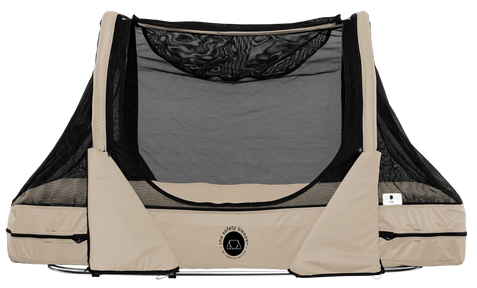
For children who thrash, fall, or aggressively head-bang, a soft-sided enclosed safety bed (like The Safety Sleeper) is often the only viable solution. These medical beds feature a heavy-duty canopy that zips securely onto the frame, while protective frame pads cover the remaining exposed areas.
Because the entire enclosure is made of durable, medical-grade fabric, there are no hard metal bars or wooden slats for the child to strike their head against. The enclosed space not only prevents the child from falling or wandering out of the room, but the "tent-like" structure provides a profound sense of sensory security, often reducing the anxiety that triggers the self-injurious behavior in the first place.
By removing the physical hazards from the bedroom and utilizing protective sleep systems, you can dramatically reduce the risk of nighttime injury, giving both your child and your family the peace of mind needed to finally get some rest.